
Post
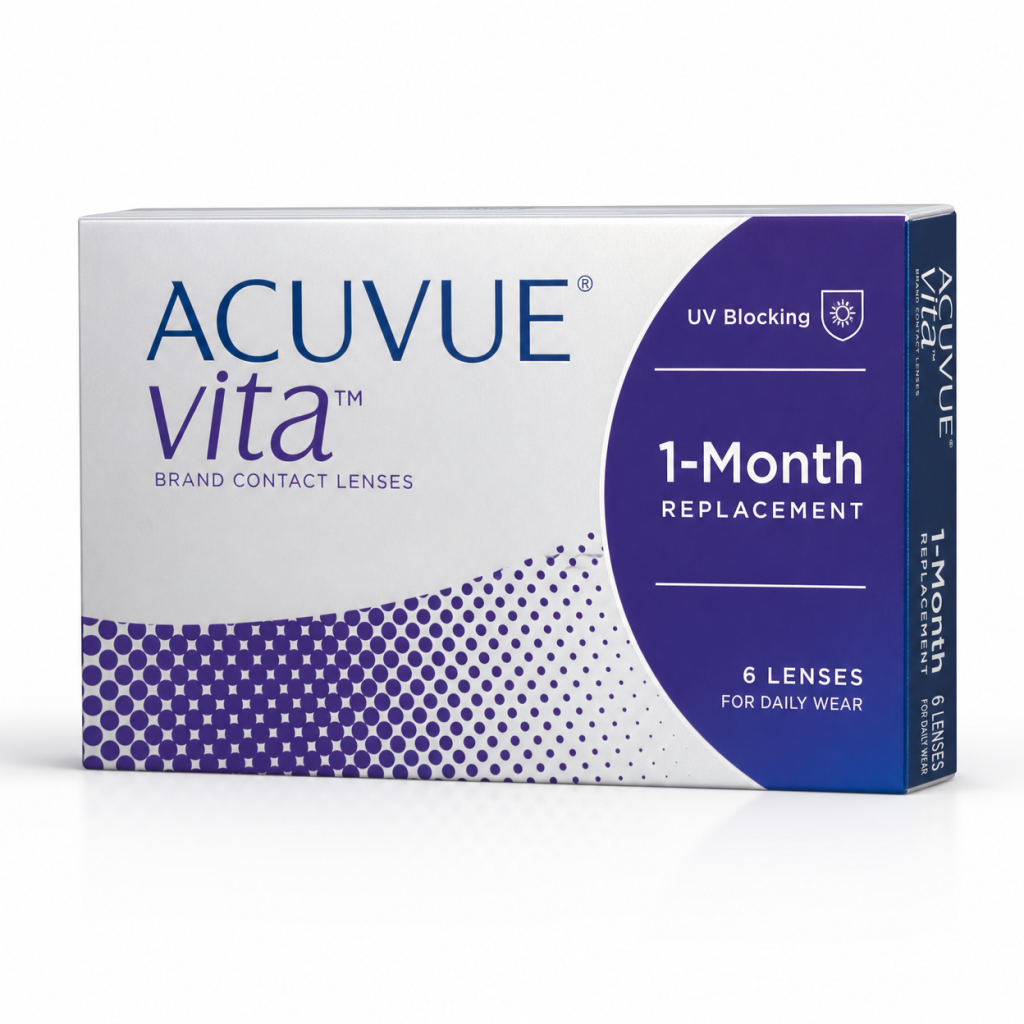
Acuvue Vita Monthly Lenses 2026: HydraMax Technology for Month-Long Comfort Consistency
May
Acuvue Vita Monthly Lenses: HydraMax Technology for Month-Long Comfort Consistency
The fundamental promise of monthly replacement contact lenses is that a single pair of lenses will provide comfortable, clear vision for an entire calendar month. In practice, many monthly lenses fail to fully deliver on this promise: while initial comfort is often excellent, many wearers notice a progressive decline in comfort as the month progresses, with the final week of the replacement cycle frequently characterized by a noticeable deterioration from first-week performance. This comfort trajectory problem is a primary driver of patient dissatisfaction with monthly lenses and a major reason why some wearers switch to daily disposables despite the higher cost. Johnson & Johnson Vision’s Acuvue Vita is designed to specifically address this comfort trajectory problem through HydraMax Technology—a system engineered to maintain comfort consistency from day one to day thirty, delivering month-long performance that matches the promise of the monthly replacement modality.
The Monthly Comfort Trajectory Problem
Understanding the Acuvue Vita’s design rationale requires understanding the mechanisms underlying monthly contact lens comfort decline over the replacement cycle. Three primary mechanisms contribute to this trajectory: deposit accumulation, material dehydration, and physical surface wear. Deposit accumulation is the most thoroughly documented mechanism: proteins and lipids from the natural tear film adsorb continuously to the lens surface throughout the wearing period. As the deposit layer builds up over days and weeks, it creates a surface that is less wettable than the clean lens surface, more attractive to bacteria, and capable of triggering inflammatory responses in sensitive individuals. By the fourth week of a monthly cycle, deposit levels on inadequately managed lenses can reach a point where optical clarity and comfort are measurably impaired, leading to the sensation of “old” lenses that many wearers report. Material dehydration is the second contributor: most contact lens materials lose water content to the environment during wearing, and repeated hydration-dehydration cycles over weeks of daily wear can cause progressive changes in the material’s physical properties. Some materials show increased stiffness after repeated dehydration cycles, which can contribute to the mechanical discomfort many wearers notice in the latter weeks of a monthly cycle. Physical surface wear—microscopic abrasions and surface irregularities that accumulate from handling, cleaning, and the mechanical action of blinking—further degrades the lens surface over the month, creating additional sites for deposit accumulation and increasing surface friction.
HydraMax Technology: Progressive Moisture Delivery
The Acuvue Vita’s response to the monthly comfort trajectory problem is HydraMax Technology—a moisture management system built into the senofilcon C silicone hydrogel matrix that is specifically designed to maintain, and in certain conditions improve, the lens surface hydration characteristics over the course of the monthly wearing period. HydraMax incorporates moisture-attracting agents into the senofilcon C material at densities that provide a reservoir of moisture management capability that extends throughout the month. As the natural depletion mechanisms of wear and evaporation remove moisture agents from the lens surface, the reservoir replenishes the surface from within, maintaining a consistently hydrated surface character that minimizes the comfort decline that insufficient moisture management produces. Johnson & Johnson Vision’s clinical data for the Acuvue Vita demonstrates that wearers report consistent comfort ratings throughout the monthly replacement period rather than the declining trajectory observed with many competing monthly products. This comfort consistency is the primary design target of the HydraMax system, and the clinical evidence suggests that the system achieves this target effectively for a significant proportion of the tested population. For wearers who have experienced the frustration of lenses that feel great for two weeks and then deteriorate rapidly, the Acuvue Vita offers a different experience: consistent, reliable comfort from the first day of the month through the last.
Senofilcon C Material Performance
Senofilcon C is a silicone hydrogel material that Johnson & Johnson Vision has specifically developed for the monthly replacement modality, incorporating formulation optimizations that address the unique challenges of a four-week wear cycle compared to the two-week or daily replacement cycles for which other senofilcon variants were developed. The material achieves a Dk/t of 147 Barrer/cm—an oxygen transmissibility level that provides comfortable daily wear without the oxygen deficit stress that lower-transmissibility materials can create during extended wearing hours. This oxygen performance is sufficient for all-day daily wear but falls below the threshold for FDA-approved extended wear, reflecting Johnson & Johnson Vision’s judgment that monthly replacement lenses are primarily intended for daily wear with nightly removal and cleaning. The senofilcon C material also incorporates UV-blocking capability classified as Class 1—the highest level available in contact lens materials—providing supplemental protection for the eye’s interior against solar UV exposure. The material’s mechanical properties have been optimized for monthly handling, with sufficient durability to withstand daily cleaning and disinfection for the full four weeks of the replacement cycle without degradation in comfort or optical performance.
UV Protection Classification
Like other Johnson & Johnson Vision contact lenses, the Acuvue Vita incorporates UV-blocking capability classified as Class 1—the highest level of UV protection available in contact lens materials. This specification reflects a UV transmission specification that blocks more than 90% of UVA and more than 99% of UVB radiation, providing meaningful supplemental protection for the eye’s interior against the solar UV exposure that cumulative research has linked to cataract development and other UV-related ocular pathology. For patients who spend significant time outdoors or who are inconsistent about wearing sunglasses, the Class 1 UV protection of the Acuvue Vita provides a valuable safety net, reducing cumulative UV exposure even when sunglasses are not worn. The UV protection is incorporated into the lens material itself rather than applied as a surface coating, ensuring that the protection remains effective for the life of the lens regardless of surface wear from handling, cleaning, or the mechanical action of blinking.
Prescription Availability and Fitting
The Acuvue Vita is available in sphere prescriptions from +8.00 to -12.00 diopters—one of the broadest prescription ranges available in a monthly replacement silicone hydrogel. This extended range makes the Vita accessible to highly myopic patients who might otherwise be directed toward specialty lens options, and to significantly hyperopic patients for whom finding comfortable, well-performing monthly lenses has historically been more challenging than for myopic patients. The fitting process follows standard parameters, with base curve options of 8.4mm and 8.8mm and a diameter of 14.0mm that accommodate a range of corneal geometries. For patients with astigmatism, the Acuvue Vita for Astigmatism extends the HydraMax comfort platform to toric correction, while the Acuvue Vita Multifocal addresses presbyopic patients. This comprehensive range ensures that the consistent comfort of HydraMax Technology is available to the vast majority of monthly lens candidates, regardless of their specific correction needs.
Care System Recommendations
The Acuvue Vita’s performance is best maintained with a care system that complements its deposit resistance design. Multi-purpose solutions with enzyme-based cleaning components provide the most effective removal of protein deposits from the senofilcon C surface during the nightly cleaning and disinfection routine. Hydrogen peroxide systems offer the most thorough disinfection and are appropriate for patients who require maximum infection risk reduction, while providing gentle, preservative-free lens storage that benefits sensitive eyes. Regardless of the care system chosen, consistent adherence to recommended cleaning and disinfection protocols is essential for maintaining the lens’s comfort and optical performance throughout the monthly replacement cycle. Patients should replace their lens case regularly (at least every three months) and should never reuse or top off care solution, as these practices can lead to microbial contamination of the lens and increase infection risk.
Conclusion: Month-Long Comfort, Delivered
The Acuvue Vita represents Johnson & Johnson Vision’s answer to the monthly contact lens industry’s most persistent performance challenge: the comfort trajectory that sees many monthly lens wearers losing confidence in their lenses as the month progresses. By addressing the mechanisms of comfort decline through HydraMax Technology rather than simply optimizing first-impression comfort, the Vita delivers a wearing experience that is genuinely different from conventional monthly alternatives—one that maintains the comfort commitment that monthly replacement is supposed to provide for the full thirty days of the replacement cycle. For wearers who have been frustrated by monthly lenses that feel great for two weeks and then disappoint, the Acuvue Vita offers a reliable, consistent alternative.
