Post
Best Air Optix Plus HydraGlyde 2026: Monthly Lenses Engineered for Digital Lifestyles
May
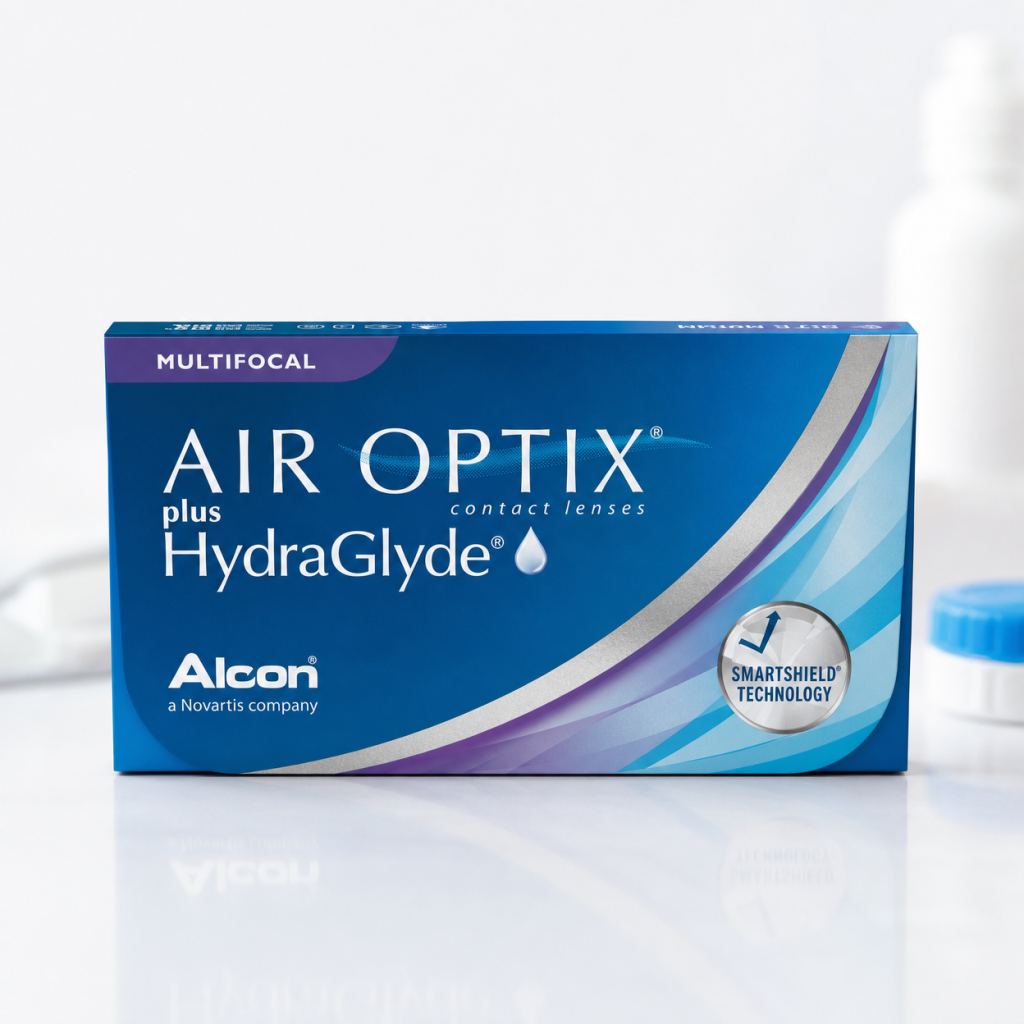
Air Optix Plus HydraGlyde: Monthly Lenses Engineered for Digital Lifestyles
As digital device use has moved from a workplace phenomenon to a constant, all-day presence in most people’s lives, the optical industry has been compelled to develop products specifically engineered for the visual demands this creates. Alcon’s Air Optix Plus HydraGlyde monthly contact lenses address the specific challenges that screen-intensive lifestyles impose on contact lens wearers: reduced blink rates, increased tear evaporation, and the accumulation of tear film deposits that progressive screen use exacerbates.
The result is a monthly replacement lens that delivers meaningfully improved comfort in the conditions that define modern daily life, allowing wearers to maintain comfortable, clear vision even during extended periods of computer work, social media scrolling, and streaming entertainment. For the digital professional who spends eight, ten, or even twelve hours per day in front of screens, the Air Optix Plus HydraGlyde offers a tailored solution that addresses the unique physiological challenges of the modern work environment.
Understanding the Digital Device Effect on Contact Lens Comfort
The connection between digital device use and contact lens discomfort is well-established in clinical literature. Normal blink rate at rest is approximately 12-15 blinks per minute—a rate that maintains the tear film by spreading fresh tears across the ocular surface and removing evaporated film with each blink. During focused screen reading, blink rate decreases to 4-7 blinks per minute—a reduction of more than 50% from the normal resting rate. This reduced blinking allows the tear film to thin and fragment between blinks, creating the dryness, burning, and blurred vision symptoms that characterize digital eye strain.
For non-lens wearers, this reduced blink rate causes discomfort that is typically relieved by taking breaks, using artificial tears, or simply becoming aware of the need to blink more frequently. For contact lens wearers, however, this reduced blink rate has additional and more severe consequences: the lens surface dries more rapidly than during normal-blink-rate activities, accelerating deposit accumulation and creating the surface dehydration that is the primary driver of late-day lens discomfort. Moreover, the digital environment itself—air-conditioned offices, dry heated homes, and the electromagnetic fields generated by electronic devices—can further exacerbate tear film evaporation.
Air Optix Plus HydraGlyde addresses both components of this problem through its dual-technology approach, providing sustained moisture release that counteracts the drying effects of reduced blinking and deposit-resistant surface properties that maintain lens clarity and comfort despite the increased tear film concentration that occurs during prolonged screen use.
HydraGlyde Moisture Matrix
The HydraGlyde component of the lens name refers to a moisture-releasing system embedded throughout the lotrafilcon B silicone hydrogel lens matrix. Unlike surface wetting agents that are applied as coatings and deplete over time—requiring the wearer to rely on a finite reservoir of comfort agents that may be exhausted before the end of the wearing day or the end of the replacement month—the HydraGlyde Moisture Matrix consists of amphiphilic agents distributed throughout the lens material that continuously migrate to the lens surface as surface agents are depleted by blinking and evaporation.
This continuous replenishment mechanism maintains the lens surface’s wettability throughout the wearing day, counteracting the progressive surface drying that affects many monthly replacement lenses during the late-day period when digital device users are most likely to be experiencing discomfort. Clinical testing of the HydraGlyde system has demonstrated sustained moisture retention significantly above that of earlier Air Optix formulations, supporting the performance claims the brand makes for extended wearing comfort. The moisture matrix is also compatible with the lens’s cleaning and disinfection regimen, maintaining its performance properties through the full monthly replacement cycle without degradation from repeated exposure to care solutions.
SmartShield Technology and Deposit Resistance
The SmartShield component of the Air Optix Plus HydraGlyde formulation addresses the deposit accumulation challenge that is particularly problematic for heavy digital device users. During contact lens wear, proteins and lipids from the natural tear film continuously adsorb to the lens surface—an unavoidable consequence of the interaction between the lens material and the complex fluid environment of the tear film. Under normal blink rates, these deposits are partially removed by the mechanical action of the eyelids, maintaining a relatively clean lens surface throughout the day.
However, during the reduced blink rates characteristic of digital device use, this mechanical cleaning action is reduced, allowing deposits to accumulate more rapidly and to a greater extent than during normal activities. These deposits degrade lens optical clarity, create a surface that is more attractive to bacteria than a clean lens surface, and contribute to the discomfort sensation that many wearers notice as the month progresses. SmartShield Technology creates a thin, permanent surface layer on the lotrafilcon B material that is specifically engineered to resist the adsorption of tear film proteins and lipids.
The surface layer’s molecular structure minimizes the attractive interactions between the lens surface and the deposit-forming components of the tear film, maintaining a cleaner, more consistently comfortable lens surface throughout the monthly replacement cycle. This deposit resistance is particularly valuable for digital device users, who are at elevated risk of deposit-related comfort degradation due to their reduced blink rates.
Lotrafilcon B and Oxygen Transmissibility
The Air Optix Plus HydraGlyde’s oxygen performance is provided by lotrafilcon B—a second-generation silicone hydrogel material with a Dk/t of 138 Barrer/cm. This oxygen transmissibility level provides comfortable all-day wear for most patients without the corneal hypoxic stress that lower-transmissibility materials can induce, ensuring that the cornea receives adequate oxygen even during extended wearing sessions or in reduced-oxygen environments such as high altitudes or stuffy offices.
While below the threshold for approved overnight wear (generally considered to be approximately 125 Barrer/cm for most patients), the lotrafilcon B specification is appropriate and sufficient for the daily wear modality for which the lens is indicated, providing a safety margin that accommodates individual variations in oxygen demand. For the typical digital device user who removes their lenses before sleep each night, the lotrafilcon B material delivers all the oxygen the cornea requires without the unnecessary expense or potential handling difficulties of higher-Dk materials designed for extended wear.
Care Solution Compatibility
The Air Optix Plus HydraGlyde is compatible with all major multi-purpose contact lens care solutions as well as hydrogen peroxide-based systems. The SmartShield surface is stable across the range of cleaning solution formulations, and the HydraGlyde system does not require specific solution chemistry to maintain its function, giving wearers the flexibility to choose the care system that best meets their needs and preferences.
Patients who prefer hydrogen peroxide systems for their more thorough disinfection capability—particularly beneficial for heavy digital device users who may be at elevated risk of deposit-related microbial contamination—can use them without concern about compromising the lens’s performance characteristics. The lens’s compatibility with a wide range of care solutions is an important practical consideration for monthly lens wearers, who must incorporate lens care into their daily routines and who may need to switch solutions based on availability, cost, or individual sensitivity to preservatives.
Prescription Range and Fitting Considerations
The Air Optix Plus HydraGlyde is available from +6.00 to -12.00 diopters in sphere, from -0.75 to -2.25 diopters in cylinder (toric version), and with a range of additions for the multifocal configuration. This broad range makes the lens accessible to the large majority of contact lens candidates, including patients with moderate to high myopia who represent a significant proportion of the contact lens wearing population.
The fitting process for the Air Optix Plus HydraGlyde follows standard parameters, with base curve options of 8.6mm and diameter of 14.2mm that accommodate the majority of corneal geometries. For toric patients, the prism ballast stabilization system provides consistent rotational alignment across a range of fitting conditions, making the Air Optix Plus HydraGlyde Toric a reliable choice for practitioners and patients alike.
Conclusion: Digital Life, Optimized
The Air Optix Plus HydraGlyde represents Alcon’s most comprehensive monthly replacement lens technology, combining HydraGlyde sustained moisture delivery with SmartShield deposit resistance to address the two primary drivers of monthly lens discomfort.
For patients who spend significant portions of their day using digital devices and find that conventional monthly lenses become uncomfortable during the later portions of the wearing day or the later weeks of the replacement cycle, the HydraGlyde formulation offers a clinically validated improvement in performance that justifies its position in the premium monthly replacement market. It is the monthly lens designed for the way we live now.
