Post
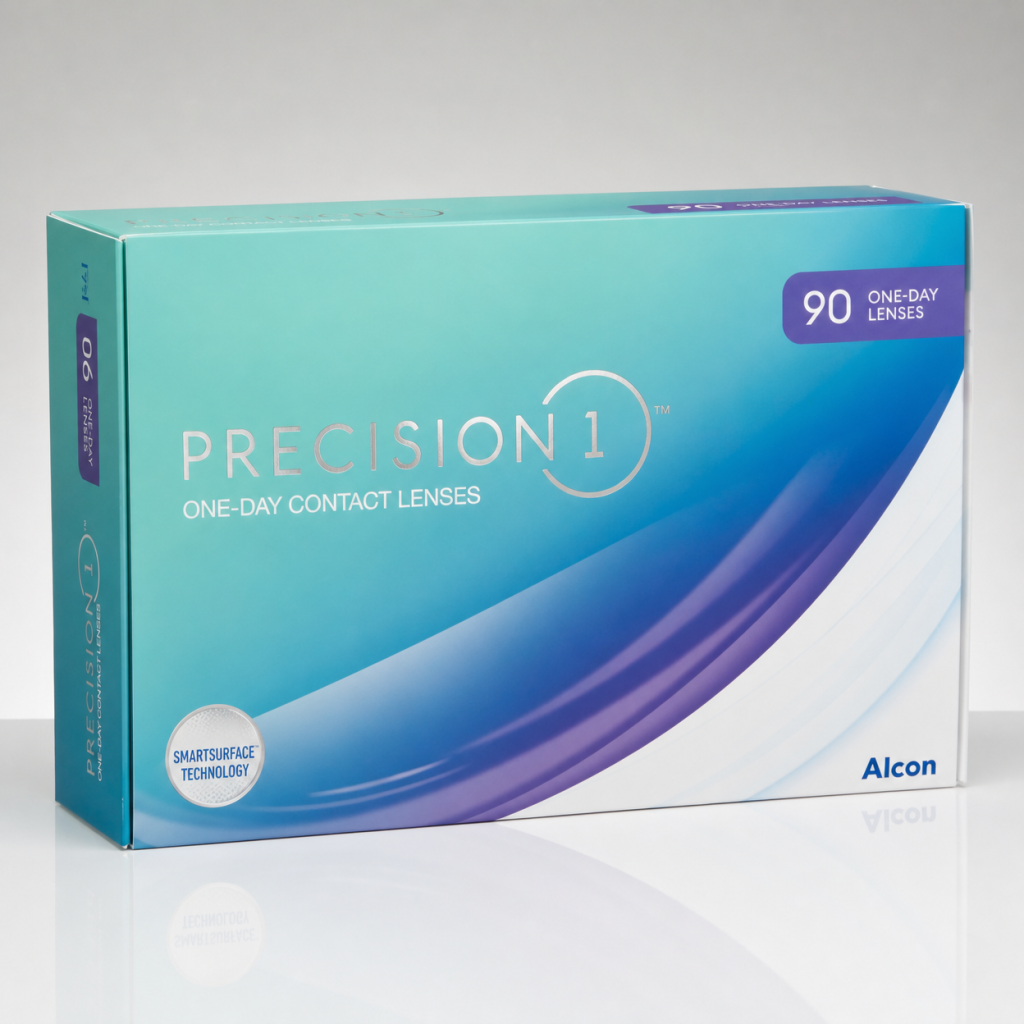
Best Alcon Precision1 Daily Lenses: SmartSurface Nanotechnology for the Next Generation of Comfort
May
Alcon Precision1 Daily Lenses: SmartSurface Nanotechnology for the Next Generation of Comfort
The evolution of contact lens surface technology over the past two decades has followed a clear trajectory: from bulk material modifications that improved the average surface character of the entire lens, toward increasingly precise, thin-layer surface engineering that optimizes the specific lens-eye interface while leaving the bulk material properties uncompromised. Alcon’s Precision1 daily disposable lenses represent the most advanced expression of this trajectory, applying nanotechnology-scale surface engineering to create a lens surface that performs differently—and demonstrably better—than any surface treatment applied to previous daily disposable designs. The result is a lens that achieves a new level of comfort performance, particularly for wearers who have struggled with end-of-day dryness and lens awareness with other daily disposable options. For those who demand the absolute best in daily lens comfort, the Precision1 sets a new standard that competitors are still working to match.
SmartSurface Technology: Engineering at the Nanoscale
The SmartSurface Technology applied to Precision1 lenses creates a surface hydrophilic layer with a precisely controlled thickness of 80 nanometers—a measurement that requires framing in physical terms to appreciate its extraordinary fineness. A human hair is approximately 70,000 nanometers in diameter, meaning that the SmartSurface layer is roughly 875 times thinner than a human hair. A typical lens coating applied by conventional means might be several hundred to several thousand nanometers thick, providing a relatively coarse surface modification that can affect the bulk properties of the lens and may create a perceptible boundary layer. The SmartSurface layer at 80 nanometers is thinner than the wavelength of visible light—thinner than structures the human eye can resolve or that conventional optical microscopy can easily characterize. At this thickness, the SmartSurface layer does not affect the bulk optical or mechanical properties of the underlying verofilcon A silicone hydrogel lens—it is simply too thin to influence parameters governed by the bulk material, such as oxygen transmissibility, refractive index, or mechanical modulus. What it does influence, profoundly, is the surface energy of the lens—the property that determines how the lens surface interacts with water, lipids, proteins, and the cellular structures of the eyelid and conjunctiva that contact the lens surface during wear. By precisely controlling surface energy at the nanoscale, SmartSurface Technology creates a lens surface that optimizes wettability and minimizes protein adsorption without compromising the bulk material properties that make the Precision1 a high-performance silicone hydrogel lens.
Blink-Activated Moisture Release
The functional innovation that the SmartSurface layer enables is blink-activated moisture release—a mechanism by which the mechanical action of the eyelid sweeping across the lens surface during blinking activates the release of moisture from the SmartSurface layer. This converts the unavoidable mechanical interaction between eyelid and lens from a potential source of friction and discomfort into a comfort-reinforcing mechanism that refreshes the lens surface moisture with every blink. The mechanism works through the nanoscale structure of the SmartSurface layer, which traps moisture in a network of microscopic reservoirs that are compressed by the pressure of the eyelid during blinking, releasing a fresh layer of moisture onto the lens surface with each blink. The practical effect of this mechanism is that wearers of Precision1 lenses report sustained comfort that does not follow the declining trajectory observed with many daily disposable alternatives over the wearing day. As wearing hours accumulate and surface agents are progressively depleted by environmental exposure and the normal dynamics of tear film interaction, the blink-activated release mechanism continues to replenish the surface character, maintaining comfort-supporting hydration through periods of extended wear that challenge conventional surface technologies. For wearers who have experienced the phenomenon of lenses that start the day feeling great but become increasingly uncomfortable as the hours pass, the Precision1 offers a different experience: sustained, consistent comfort that lasts from insertion to removal, maintained by the natural act of blinking.
Verofilcon A: Silicone Hydrogel for Precision Applications
The verofilcon A silicone hydrogel core of the Precision1 lens achieves a water content of 51% and an oxygen transmissibility (Dk/t) of 100 Barrer/cm—specifications that reflect careful optimization for the daily disposable wearing context. The water content provides a comfortable material feel while maintaining the structural consistency that precision-manufactured optics require, and the oxygen transmissibility level ensures adequate corneal oxygen supply throughout normal daily wearing periods of up to 16 hours. The verofilcon A formulation supports the adhesion and functional performance of the SmartSurface layer through specific surface chemistry interactions that are the product of extensive materials engineering development. The surface layer and bulk material are designed as a functional system rather than independent components, ensuring that the SmartSurface technology performs optimally in combination with the specific material properties of the verofilcon A substrate. This integrated design approach—optimizing the bulk material and surface layer together rather than as separate components—is one of the key differentiators of the Precision1 platform and a primary reason for its superior comfort performance.
Extended Prescription Range
The Precision1 is available in sphere prescriptions from +6.00 to -12.00 diopters—a broad range that accommodates a larger proportion of the contact lens population than many competing daily disposable designs with narrower available powers. This range is particularly significant at the high myopia end, where patients with powers of -8.00 diopters and above represent a population that has historically had limited options in the daily disposable category and for whom the health benefits of silicone hydrogel oxygen transmissibility are especially relevant due to the link between high myopia and elevated risk of myopia-related ocular complications such as retinal detachment, myopic maculopathy, and glaucoma. For these patients, the Precision1 offers a combination of high oxygen performance and exceptional comfort that was previously unavailable in daily disposable formats, providing an important new option for practitioners fitting high-myopia patients.
Taper Edge Design and Lid Comfort
The Precision1 features a taper edge design that reduces the mechanical interaction between the edge of the lens and the inner surface of the eyelid during blinking. The contact between the lens edge and the eyelid tissue is a significant source of the lens awareness sensation that contact lens wearers experience, and reducing this interaction through precision edge geometry is one of the primary approaches available to lens designers seeking to minimize the foreign body sensation of lens wear. The taper edge design creates a smoother transition between the lens and the ocular surface, reducing the “edge awareness” that many wearers report with thicker or less precisely designed lens edges. Combined with the SmartSurface Technology’s reduction of surface friction, the taper edge design contributes to the Precision1’s exceptionally low lens awareness profile, allowing wearers to forget they are wearing contact lenses even during extended wear sessions.
Deposit Resistance and Late-Day Optical Clarity
The SmartSurface layer’s hydrophilic character and continuous moisture renewal mechanism contribute to deposit resistance as well as comfort—the sustained moisture presence at the lens surface creates an aqueous barrier that inhibits the adsorption of lipid and protein deposits from the tear film. This deposit resistance maintains the optical clarity of the lens through the wearing day more effectively than surfaces that allow progressive deposit accumulation, which can degrade contrast sensitivity and visual acuity even when comfort remains acceptable. For wearers who perform visually demanding tasks—driving at night, reading fine print, working with detailed visual materials—the deposit resistance of the Precision1 provides a meaningful advantage over lenses that allow progressive deposit accumulation throughout the day.
Conclusion: Nanotechnology Meets Daily Comfort
The Alcon Precision1 represents the current frontier of daily disposable contact lens surface technology—a nanoscale engineering achievement that delivers measurable, sustained comfort advantages through a mechanism fundamentally different from previous surface improvement approaches. For patients seeking maximum daily wearing comfort and optical performance from a daily disposable silicone hydrogel lens, the Precision1’s SmartSurface technology offers a genuinely differentiated solution that justifies its position in the premium daily disposable segment, setting a new benchmark for what wearers can expect from their daily lenses.
